
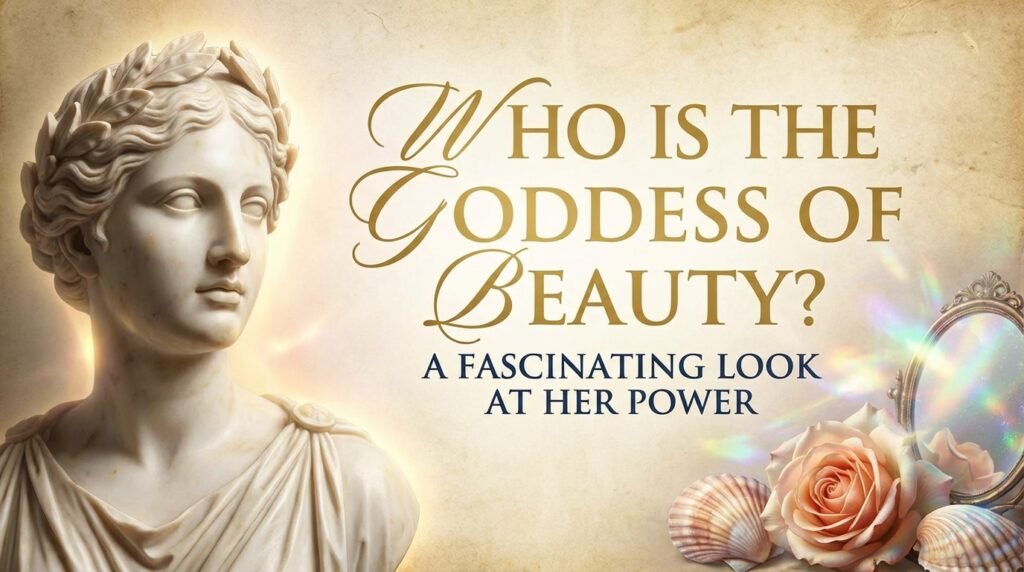
Beauty has fascinated people for thousands of years. That is why so many readers still ask who is the goddess of beauty. It sounds like a simple question, yet it opens the door to myth, love, power, and symbolism. In most traditions, the answer starts with Aphrodite, the famous goddess of beauty from Greece. Many people also know her Roman form, Venus goddess, who became just as iconic.
When people search who is the goddess of beauty, they often want more than a name. They want the story, the meaning, and the reason this figure still matters today. Was she only linked with looks, or did she represent something deeper? As you read on, you will see that this goddess of love and beauty stood for desire, charm, fertility, and emotional pull.
This guide explains who is the goddess of beauty in a clear and simple way. You will learn about beauty goddess mythology, symbols, legends, and the lasting power of this mythological goddess of beauty.
Who Is the Goddess of Beauty in Ancient Mythology
To understand who is the goddess of beauty, it helps to step back into the ancient world. Early civilisations did not treat beauty as something shallow or decorative. They saw it as a force. It could attract love, shape marriages, inspire poetry, calm conflict, and even sway rulers. In that setting, an ancient goddess of beauty was far more than a pretty figure in a story. She was a divine presence connected with longing, fertility, pleasure, harmony, and the magnetic pull between people. In many old cultures, beauty had spiritual weight. It suggested blessing, vitality, and favour from the gods. That is why the idea of a female deity of beauty appeared again and again across mythic traditions. Even when names changed, the pattern stayed the same. People imagined a divine woman who embodied grace, desire, and emotional power.
The wider field of beauty goddess mythology shows that this idea was never limited to one culture. In the Mediterranean world, the Near East, and parts of Asia, myths often linked beauty with life itself. A goddess of beauty in mythology could bless unions, stir passion, protect fertility, or represent the sweetness of love. In practical life, worshippers asked for help with marriage, childbirth, attraction, and social favour. Beauty was not only admired. It was believed to shape destiny. That is why temples, offerings, songs, and rituals often honoured a beauty deity or love goddess. The old myths reveal a simple truth. Human beings have always believed that beauty changes behaviour. It softens hearts, sparks competition, and inspires devotion. In that sense, every mythological beauty figure carried both charm and power.
Ancient writers also used these divine figures to explain human emotion. Why do people fall deeply in love? Why does desire feel both joyful and dangerous? Why can attraction create peace in one moment and jealousy in the next? Myths answered those questions through goddesses. They gave beauty a face, a personality, and a voice. That is one reason the question who was the goddess of beauty still appears today. It is really a question about human nature. Readers want to know which divine figure best captured that strange mix of sweetness, longing, glamour, and emotional force.
Who Is the Goddess of Beauty and What Does She Represent
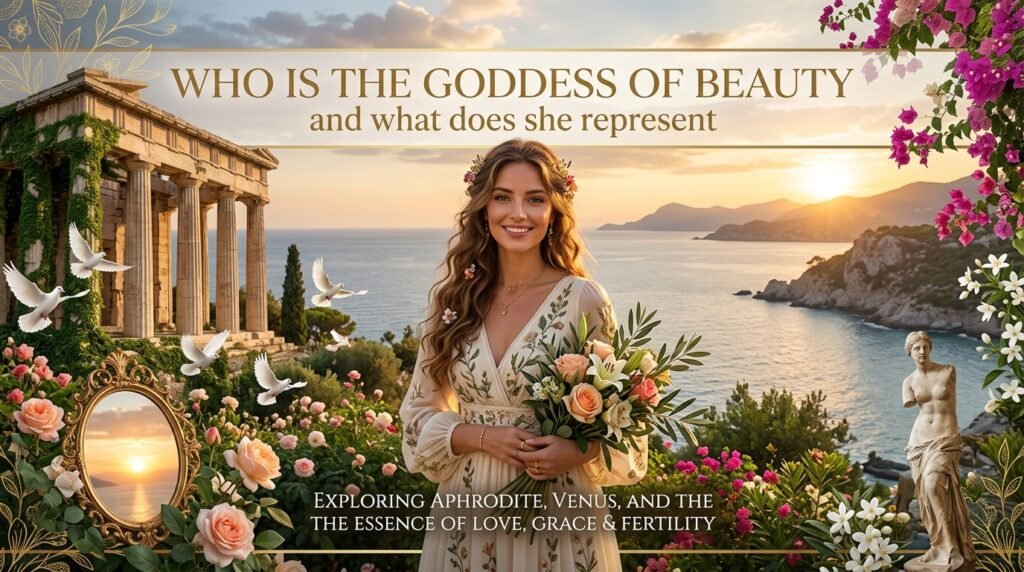
When readers ask what does the goddess of beauty represent, they are usually asking about far more than appearance. In myth, a goddess of beauty often represents desire, attraction, fertility, romance, grace, sensual pleasure, and the spark that draws one person to another. She can also symbolise confidence, charisma, and the power of presence. That is why the goddess of beauty meaning goes deeper than surface charm. In old stories, beauty was not passive. It moved people. It changed choices. It stirred battles, inspired art, and shaped destiny. This is why a beauty and love goddess often appears at the centre of myths about marriage, rivalry, seduction, loyalty, and temptation.
In many traditions, the goddess of love stands for emotional energy as much as physical attraction. She reflects the part of life that feels irresistible. You can see this in love stories across time. A smile changes a room. A glance starts a poem. A desire reshapes a life. Myth turns that feeling into a goddess. The goddess of beauty in mythology therefore represents both outer beauty and inner pull. In simple terms, she is the divine form of attraction itself. For example, the Greeks linked beauty to joy, desire, and fertility. The Romans gave it elegance, romance, and civic meaning. In both settings, the mythological goddess of beauty had influence because she embodied a force that people felt every day.
There is also a symbolic side. The goddess symbolism around beauty often includes mirrors, flowers, doves, seashells, or birds. These images suggest reflection, softness, renewal, affection, and fertility. They show that beauty was seen as something living and active. In modern language, you might say the goddess represents the power of charm and emotional connection. In mythic language, she becomes the goddess of love and beauty, a divine figure whose presence explains why hearts race and stories begin. That is why the question which goddess represents beauty still has such lasting appeal. It touches something universal. Everyone understands the force of attraction, even if they describe it in different ways.
Who Is the Goddess of Beauty in Greek and Roman Legends
The clearest answer to who is the Greek goddess of beauty is Aphrodite. In Greek tradition, Aphrodite goddess of beauty is the most famous divine figure linked with love, desire, attraction, and sensual grace. If someone asks who is Aphrodite, the simplest answer is this: she is the Greek goddess of beauty, often called the Greek goddess of beauty and the goddess of love and beauty. Ancient Greek poets described her as irresistible. Gods and humans felt her power. She appears in some of the best-known myths of the ancient world. This is why the question is Aphrodite the goddess of beauty can be answered directly. Yes, she is the best-known Greek mythology beauty goddess and one of the most enduring figures in world mythology.
Greek stories gave Aphrodite a rich and sometimes unpredictable character. In one famous tradition, she was born from sea foam. That image alone helped shape her legend. Beauty rising from the sea suggested freshness, mystery, and divine allure. In other myths, she influences love affairs, rivalries, marriages, and tragic passions. She is gentle in some tales, fierce in others. That balance matters. The Greeks did not treat beauty as harmless. They knew it could inspire devotion, yet also jealousy and conflict. One often-cited example is the Judgement of Paris, where beauty leads to rivalry among goddesses and helps set the stage for the Trojan War. In mythic terms, that story shows a powerful truth. Beauty can unite hearts, yet it can also set events in motion like the first push of a falling stone.
If the Greek answer is Aphrodite, then who is the Roman goddess of beauty is answered by Venus. The Roman goddess of beauty is Venus, and in Roman culture she became a major symbol of love, elegance, fertility, and ideal feminine charm. So when readers ask is Venus the goddess of beauty, the answer is also yes. Venus goddess of beauty is the Roman counterpart to Aphrodite and one of the most famous divine figures in classical civilisation. The Venus goddess image travelled widely through Roman poetry, sculpture, public life, and later European art. That is why the question why is Venus known as the goddess of beauty still appears so often in modern searches. Her image became a cultural shorthand for beauty itself.
Although Aphrodite goddess of beauty and Venus goddess of beauty are closely linked, they are not always presented in exactly the same way. Greek writers often show Aphrodite as emotionally intense, sensual, and disruptive. Roman writers tend to make Venus feel more polished, dignified, and tied to Roman identity. In some texts, Venus is connected not only with love but also with ancestry and the greatness of Rome. This is where the Roman mythology beauty goddess gains a slightly broader public role. The same figure who embodies attraction can also become a symbol of empire, heritage, and ideal womanhood. That difference gives depth to the question who is the Roman goddess of beauty. The answer is not just a name. It is a whole cultural identity.
| Culture | Beauty Goddess Name | Main Role | Common Image |
| Greek | Aphrodite | Love, desire, sensual beauty | Sea-born, radiant, emotionally powerful |
| Roman | Venus | Love, beauty, fertility, elegance | Graceful, idealised, culturally iconic |
This comparison helps answer several search questions at once. What is the name of the goddess of beauty in Greek myth? Aphrodite. What is the name of the goddess of beauty in Roman myth? Venus. If you ask for the most recognised beauty goddess name in the Western world, those two names lead the list.
Who Is the Goddess of Beauty in Different Cultures and Beliefs
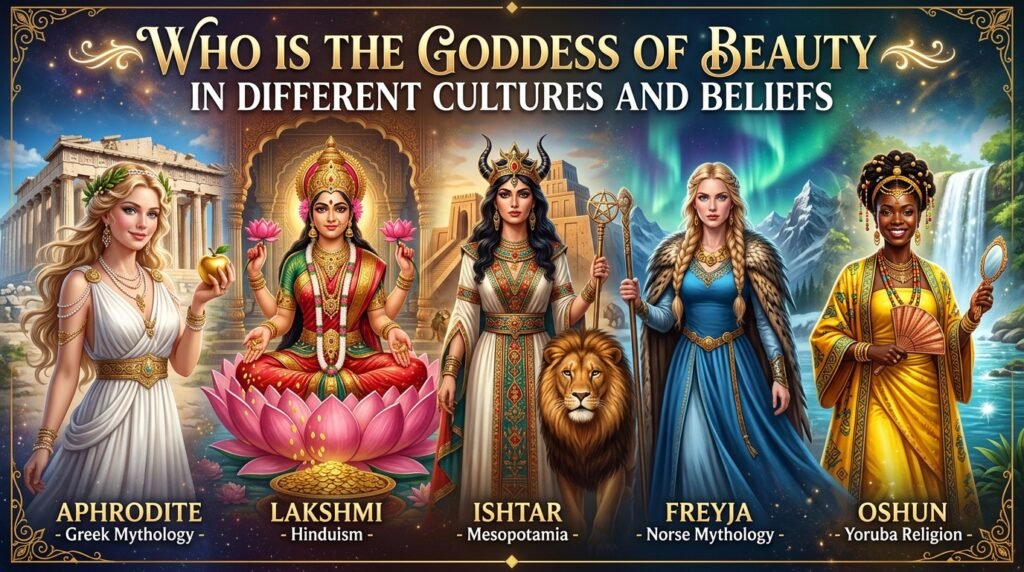
Although Aphrodite and Venus goddess are the best-known answers in the West, the idea of a goddess of beauty in mythology appears in many cultures. This matters because the question who is the goddess of beauty can have more than one cultural answer. Different societies shaped beauty in different ways. Some linked it with sensual love. Others connected it with fertility, prosperity, joy, motherhood, or divine order. In Mesopotamian belief, Inanna or Ishtar carried themes of beauty, desire, sexuality, and power. In Egyptian religion, Hathor stood for beauty, music, love, celebration, and motherhood. In Norse tradition, Freyja is often associated with love, beauty, and desire. In Hindu belief, Lakshmi is not simply a beauty figure, yet she is strongly linked with grace, radiance, prosperity, and auspicious presence. Each of these can be seen as a mythological beauty figure, though each comes from a different worldview.
This wider perspective makes beauty goddess mythology richer and more interesting. It shows that beauty was never defined in one narrow way. In one culture, beauty might mean fertility and family continuity. In another, it might suggest romantic attraction or royal splendour. In another, it might stand for harmony, abundance, and sacred order. That is why the idea of a female deity of beauty changes across traditions. Even when two goddesses share similar features, their deeper meanings can differ. A temple image, a sacred hymn, or a mythic tale might reveal what a culture admired most. Some valued passion. Some valued grace. Some valued abundance and blessing. When people ask which goddess represents beauty, the full answer depends on where you look.
A useful way to understand this is through a simple cultural lens. Imagine asking five families to define beauty. One may talk about kindness. Another may mean elegance. Another may think of fertility and family. Another may picture joy or prosperity. Ancient cultures did something similar, only they expressed it through gods and goddesses. That is why the goddess of beauty meaning is never flat. It always carries the values of the civilisation that imagined her. The Greek answer, the Roman answer, the Egyptian answer, and the Mesopotamian answer all shine a light on different human hopes. This is one reason the topic remains so compelling today. A beauty deity is not only about appearance. She reveals what a people believed made life desirable, blessed, or complete.
Who Is the Goddess of Beauty and Why Is She Still Famous Today
The lasting fame of this figure explains why so many readers still ask who was the goddess of beauty and who is the goddess of beauty. Ancient myths may be old, yet their symbols still feel fresh. People remain fascinated by beauty, attraction, romance, and the emotional pull that love creates. These are not dusty themes. They still shape films, music, fashion, advertising, novels, social media, and everyday conversation. That is why the goddess of beauty still feels alive. She represents something people recognise at once. Not just beauty in the mirror, but beauty as influence. Beauty as desire. Beauty as a force that opens doors and changes stories.
Aphrodite and Venus remain especially famous because they became larger than myth. They moved into art, language, and popular culture. The name Aphrodite often suggests sensual charm and dramatic romance. The name Venus goddess often suggests ideal beauty, softness, grace, and cultural elegance. That is why brand names, artworks, book titles, and modern retellings still return to them. In a broad sense, these figures became symbols of the human wish to be loved, admired, and desired. A university lecture on myth may discuss them in one way. A beauty campaign may borrow their image in another. A novelist may use them as shorthand for charm or longing. The settings change, yet the pull remains.
There is also a deeper reason they endure. Myths turn feelings into stories. That makes them easy to remember. Instead of speaking abstractly about attraction, the Greeks and Romans created Aphrodite goddess of beauty and Venus goddess of beauty. Instead of saying that desire changes people, they told stories in which gods, heroes, and cities were changed by these figures. In that sense, the myths still work today because people still feel the same emotions. Attraction still dazzles. Desire still complicates life. Love still inspires risk. As one classic idea puts it, beauty can open the gate to joy, yet it can also light the fuse of trouble. That tension keeps the myths alive.
The search questions themselves show this lasting appeal. People ask why is Aphrodite called the goddess of beauty because they want a direct answer, yet they also want the story behind the title. She carries that name because Greek tradition placed her at the centre of desire, sensual charm, fertility, and emotional attraction. People ask why is Venus known as the goddess of beauty for a similar reason. Roman culture made her the great image of beauty, love, elegance, and ideal femininity. Together, those traditions built one of the strongest symbols in all mythology. That is why the goddess of beauty story still speaks to modern readers. It touches vanity and vulnerability, glamour and longing, myth and everyday life.
Who Is the Goddess of Beauty in Stories, Symbols, and Art
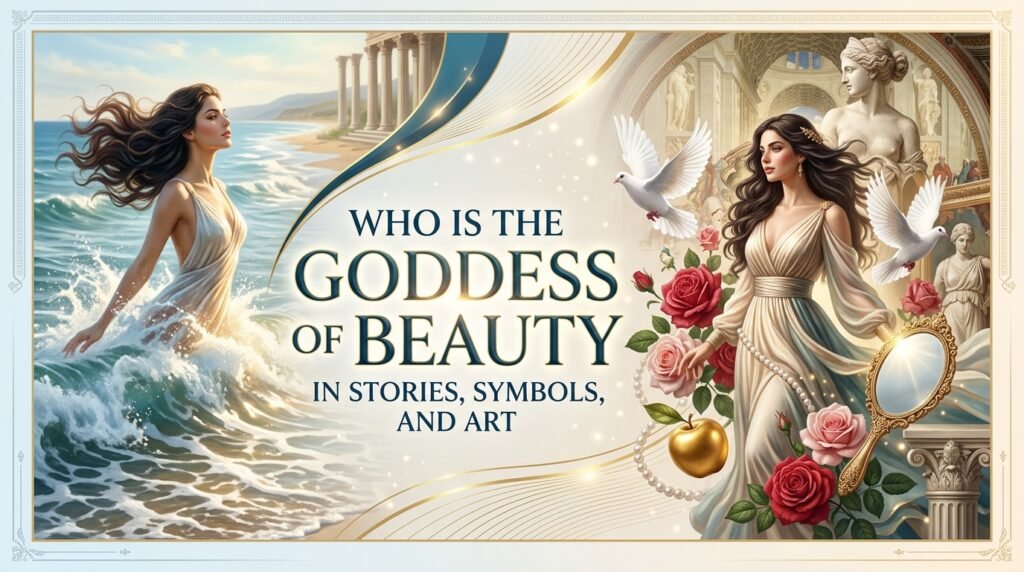
Stories gave this divine figure her lasting shape. The goddess of beauty story in Greek tradition often begins with the sea-born image of Aphrodite, rising radiant from foam. That scene became one of the most famous images in mythic imagination. Another major story is the Judgement of Paris, where beauty becomes the centre of rivalry and choice. There is also the tale of Aphrodite and Adonis, which links love with grief and the fragile nature of desire. Roman writers and artists then carried similar themes into the world of Venus goddess of beauty. These stories did not survive for centuries by accident. They stayed alive because they felt emotionally true. They captured attraction, jealousy, longing, loss, and the sweetness of being desired.
The goddess of beauty facts that matter most are often symbolic rather than numerical. She is linked with the sea because beauty feels fresh and life-giving. She is linked with flowers because beauty blooms. She is linked with a mirror because beauty invites reflection and self-awareness. She is linked with birds such as doves or swans because they suggest grace, affection, and gentle movement. These goddess of beauty symbols help readers understand the myths quickly. A seashell can mean birth and emergence. A rose can mean beauty mixed with desire. A dove can mean tenderness and romantic affection. A mirror can suggest both charm and vanity. Together, these symbols create a visual language that still works today.
The wider idea of goddess symbolism also appears strongly in art. Greek sculpture, Roman frescoes, Renaissance painting, and later literature all helped fix the image of the mythological goddess of beauty in public memory. One famous pattern appears again and again. The goddess is shown poised yet soft, powerful yet graceful, serene yet intensely alive. Artists used her body, gesture, and setting to express ideals of beauty from their own time. This means art does not only reflect the goddess. It also reshapes her. Each age creates its own version of the goddess of beauty in Greek mythology and the goddess of beauty in Roman mythology. In one century she looks modest. In another, boldly sensual. In another, almost untouchably ideal. The myth stays the same at the core, yet the face of beauty changes with culture.
That lasting artistic presence explains why the beauty deity became one of the most recognisable figures in world culture. The myths offered the story. The symbols gave it texture. Art gave it a body that people could see and remember. Once that happened, the goddess moved beyond religion into shared imagination. She became a cultural icon. A poet could mention her in one line and readers would understand the mood. A painter could place a shell, a dove, or a rose in a scene and viewers would sense the connection. In this way, symbols turned myth into memory. That is why the goddess of beauty in mythology remains such a strong image even for people who do not study the ancient world closely.
FAQs
Which name is most linked with beauty in mythology?
Who is the goddess of beauty is usually answered with Aphrodite in Greek mythology and Venus in Roman mythology.
Is she only known for looks?
No. Who is the goddess of beauty also connects with love, desire, charm, fertility, and emotional power in ancient stories.
Which Greek goddess fits this role best?
If you ask who is the goddess of beauty, the Greek answer is Aphrodite, the most famous goddess of love and beauty.
What is the Roman name for her?
When people ask who is the goddess of beauty, the Roman name is Venus, known for beauty, romance, and grace.
Why do people still ask about her today?
People still search who is the goddess of beauty because her myths, symbols, and stories still appear in art and culture.
Does this idea exist in other cultures too?
Yes. Who is the goddess of beauty can have different answers because many cultures have beauty or love goddesses.
What does she usually represent?
In most myths, who is the goddess of beauty points to a figure who represents beauty, love, attraction, and feminine power.
Conclusion
The question of who is the goddess of beauty has a clear answer, yet it also opens a much bigger story. In Greek myth, the answer is Aphrodite, the famous Greek goddess of beauty. In Roman legend, the answer is Venus, the celebrated Roman goddess of beauty. Together, they shaped the classic image of the goddess of love and beauty.
Yet who is the goddess of beauty is not only about naming a figure from the past. It is also about understanding what beauty meant in myth. This goddess of beauty stood for attraction, desire, fertility, grace, and emotional power. She was a symbol of what draws people together and changes lives. That is why who is the goddess of beauty still matters today. The myths remain vivid. The symbols still speak. The stories still shine. Whether you think of Aphrodite goddess of beauty or Venus goddess of beauty, the answer still feels timeless and powerful.
See how choice health and fitness can boost energy, improve habits, and make your daily routine healthier and easier to follow.
Who Is the Goddess of Beauty Who Is the Goddess of Beauty Who Is the Goddess of Beauty Who Is the Goddess of Beauty Who Is the Goddess of Beauty Who Is the Goddess of Beauty Who Is the Goddess of Beauty Who Is the Goddess of Beauty Who Is the Goddess of Beauty Who Is the Goddess of Beauty Who Is the Goddess of Beauty Who Is the Goddess of Beauty Who Is the Goddess of Beauty Who Is the Goddess of Beauty Who Is the Goddess of Beauty Who Is the Goddess of Beauty Who Is the Goddess of Beauty