

Walking is one of the simplest ways to stay active and feel healthier. Walking for health and fitness can improve your body and mind without requiring expensive equipment or gym memberships. Even a short daily walk can make a big difference.
Many people underestimate walking for health and fitness, but studies show that fitness walking can boost energy, strengthen the heart, and reduce stress. Making walking exercise part of your routine is easy and effective.
Starting daily walking routines can feel overwhelming, but small steps add up. Walking for health and fitness helps you stay active, lose weight, and maintain a strong, healthy body. With consistent effort, you can improve your stamina, energy levels, and mental wellbeing naturally.
Benefits of Walking for Health and Fitness Every Day
The health benefits of walking are immense. Walking for cardio health strengthens your heart, lowers blood pressure, and improves circulation. Studies show that people who engage in regular walking exercise are less likely to develop heart disease or diabetes. Fitness walking also boosts metabolism, helping with walking for weight loss naturally.
Walking impacts your mental health as well. Walking for mental health reduces stress, lifts mood, and can even improve focus. Daily movement encourages the release of endorphins, which help you feel happier and more alert. Even a brisk ten-minute walk can boost energy and sharpen your mind.
Consistency matters. A daily walking routine strengthens muscles, improves joint health, and increases endurance. Over time, your body adapts, making even light activity feel easier. This is a low-impact way to maintain fitness and achieve long-term results.
Best Practices for Walking for Health and Fitness Safely
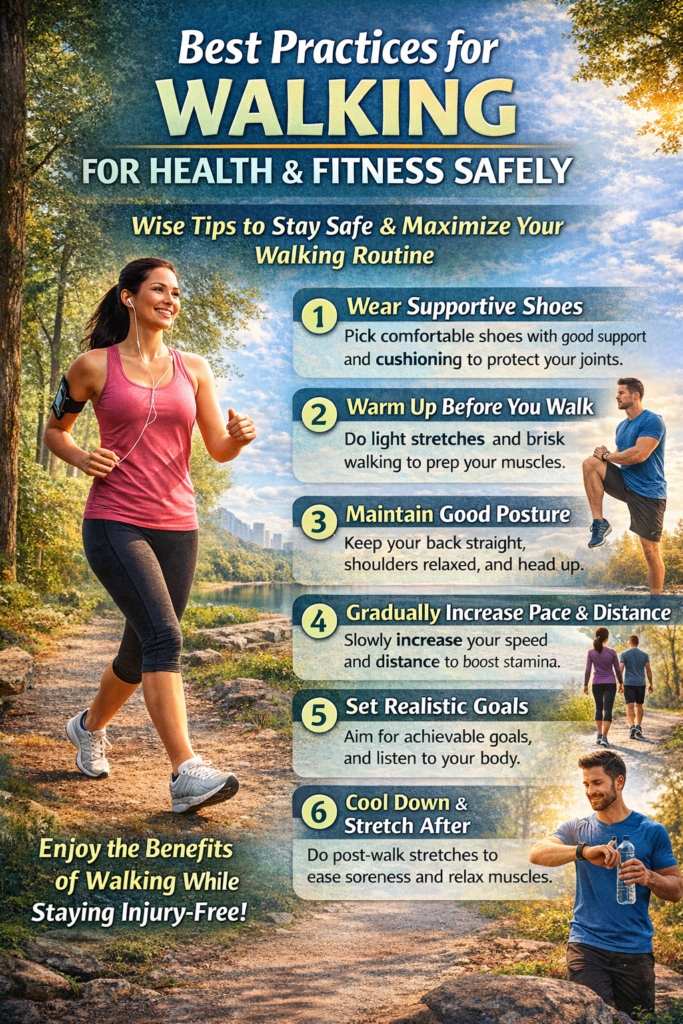
When starting walking about health and fitness, safety is key. For walking beginners, proper footwear is essential. Supportive shoes reduce strain on joints and prevent injuries. Posture matters too; keeping your back straight and shoulders relaxed enhances your walking workout plan.
Gradually increase your pace and distance to increase stamina with walking. Overexertion can lead to fatigue or injury, so stick to achievable goals. Low-impact exercise for health like walking is gentle but effective, making it suitable for most ages and fitness levels.
Warm-ups and cool-downs are important. Stretching before a walk prepares muscles, while post-walk stretches reduce soreness. Following these best practices ensures your daily walking routine remains safe, enjoyable, and effective.
Walking for Health and Fitness: Tips to Maximize Results
To get the most from walking about health and fitness, try interval walking. Alternate between a brisk pace and a slower pace to challenge your heart and burn calories faster. Adding hills or stairs can also enhance walking for strength and endurance.
Tracking your progress is helpful. Setting step count goals for fitness or following a walking workout plan motivates consistency. Combining walking with simple exercises for energy, like squats or lunges, can improve results without adding strain.
Even busy schedules can accommodate walking. Short walks during lunch breaks, morning routines, or after dinner all count. Following a fitness plan for busy people ensures you maintain a healthy lifestyle without overhauling your schedule. Walking as a daily routine transforms fitness into a natural habit.
Daily Walking for Health and Fitness to Boost Energy Levels
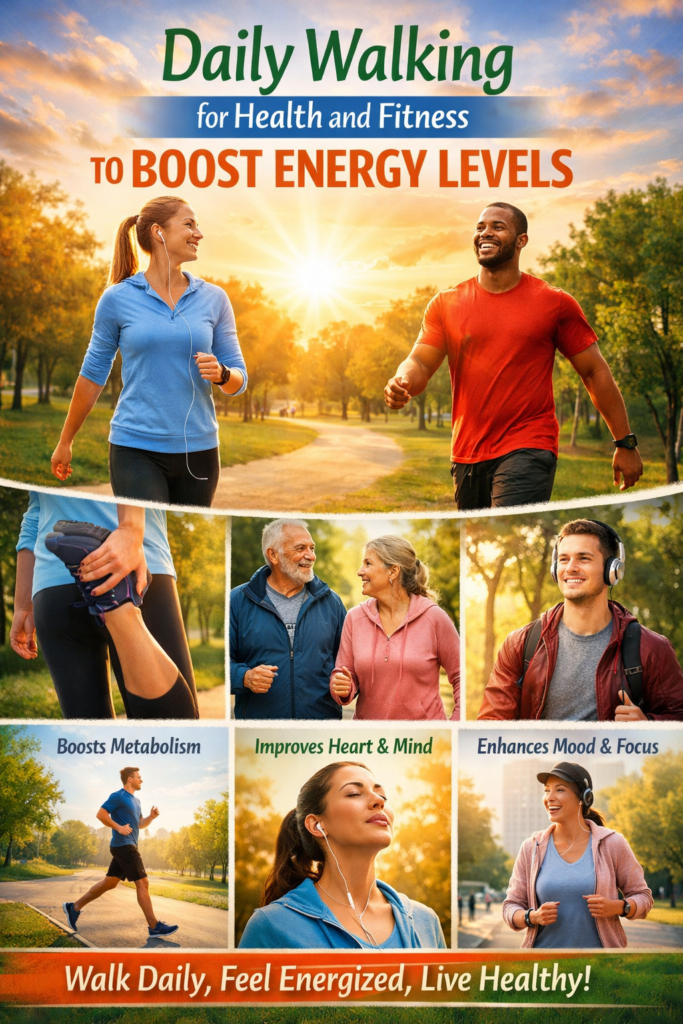
Incorporating walking about health and fitness into your daily life directly increases energy levels. A 20–30 minute morning walk can jumpstart metabolism, while an afternoon walk combats fatigue. Simple exercises for energy during walks, like arm swings or light stretching, keep circulation strong.
Daily fitness habits like these improve cardiovascular health and mental clarity. Exercises for heart and mind during walking enhance focus, reduce stress, and lift mood. People who commit to walking for energy consistently often report feeling more alert and productive throughout the day.
Consistency matters more than intensity. By making walking as a daily routine, you maintain a healthy lifestyle and create lasting results. Even brief walks accumulate, helping you reach your fitness goals gradually but effectively.
Walking for Health and Fitness: Ideal Routines for Beginners
For those new to exercise, a walking schedule for beginners works best when gradual. Start with 10–15 minutes of brisk walking tips three times a week. Gradually increase duration and pace to 30 minutes or more.
Sample routines might include morning walks, evening strolls, or lunchtime steps. Combining walking for weight loss with light stretching or strength exercises builds endurance safely. Beginners can track progress with a daily walking routine, noting improvements in stamina and energy over time.
By starting small, beginners can steadily adapt to walking about health and fitness. Over weeks, walking becomes easier, more enjoyable, and a natural part to maintain healthy lifestyle.
Tools and Gear to Enhance Walking for Health and Fitness
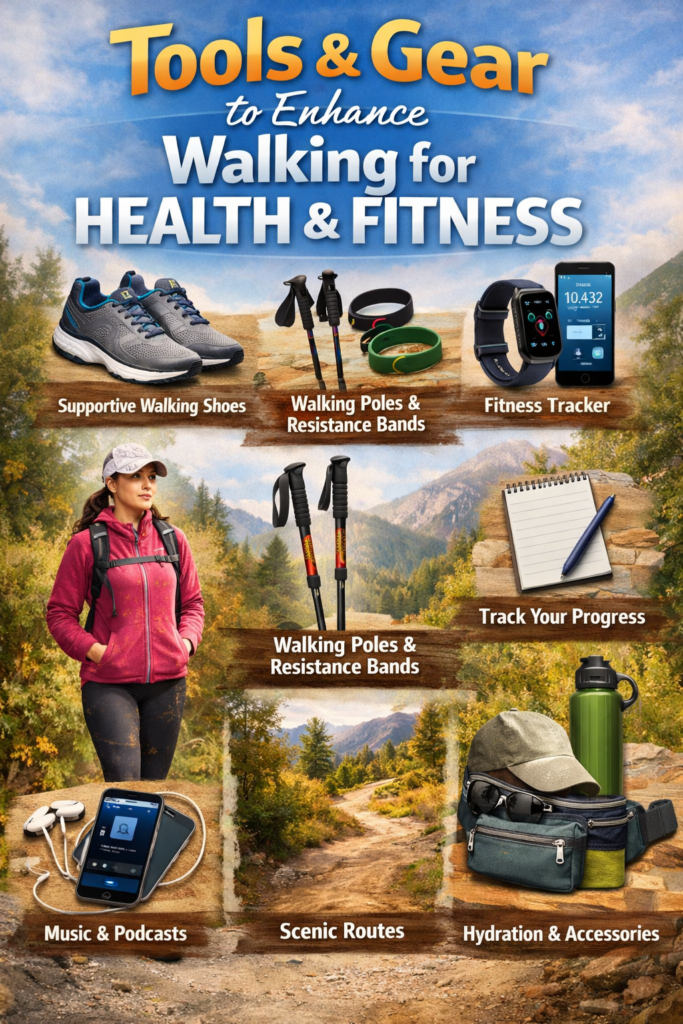
Proper gear makes walking about health and fitness safer and more enjoyable. Supportive shoes prevent injuries and improve posture. Fitness trackers help monitor distance, steps, and step count goals for fitness. Comfortable clothing suited to weather conditions keeps walks pleasant.
Optional tools like resistance bands or walking poles can enhance fitness walking on trails or hilly areas. Tracking progress and goals with these tools ensures your walking workout plan stays on track. Accessories may seem small, but they support consistency and motivation.
Staying motivated is crucial. Pairing walking as a daily routine with music, podcasts, or scenic routes can turn exercise into an enjoyable habit, making it easier to stick with a long-term daily walking routine.
FAQs
What are the easiest ways to stay active daily?
You can start walking for health and fitness with short strolls, brisk walks, or a structured daily walking routine to boost energy and stamina.
How does walking affect mental wellbeing?
Regular movement like walking for health and fitness reduces stress, lifts your mood, and improves focus, helping both mind and body stay sharp and healthy.
Can walking help with weight management?
Yes, walking for health and fitness supports natural weight loss, improves metabolism, and combines well with simple exercises to maintain a healthy lifestyle over time.
What is the best pace for effective walking?
Brisk but comfortable pace is ideal for walking for health and fitness, improving cardio health, building endurance, and boosting energy without overstraining muscles.
How can beginners start walking safely?
Start slow and follow a walking for health and fitness schedule for beginners. Gradually increase distance and pace to avoid injuries while building stamina.
How often should one walk for maximum benefit?
Daily walking for health and fitness routines, even 20–30 minutes a day, improve heart health, mental clarity, and overall energy consistently over time.
What tools or gear improve walking results?
Supportive shoes, comfortable clothes, and trackers help make walking for health and fitness safer and more effective while motivating you to meet step goals.
Conclusion
Walking for health and fitness is simple, effective, and accessible for everyone. It boosts energy, supports weight management, and improves heart and mental health. Even short daily walks have long-term benefits.
Consistency is key. Walking for health and fitness by following daily walking routines and incorporating fitness walking, you can gradually build strength, endurance, and mental clarity. Tracking progress and setting step count goals for fitness makes walking motivating and rewarding. No matter your age or fitness level, walking for health and fitness can be adapted to suit your lifestyle. Start small, stay consistent, and enjoy the health benefits of walking every day. Your energy, mood, and overall wellbeing will thank you.
Boost energy, improve mood, and strengthen your body with the proven benefits of leading a healthy lifestyle every day for lasting health.